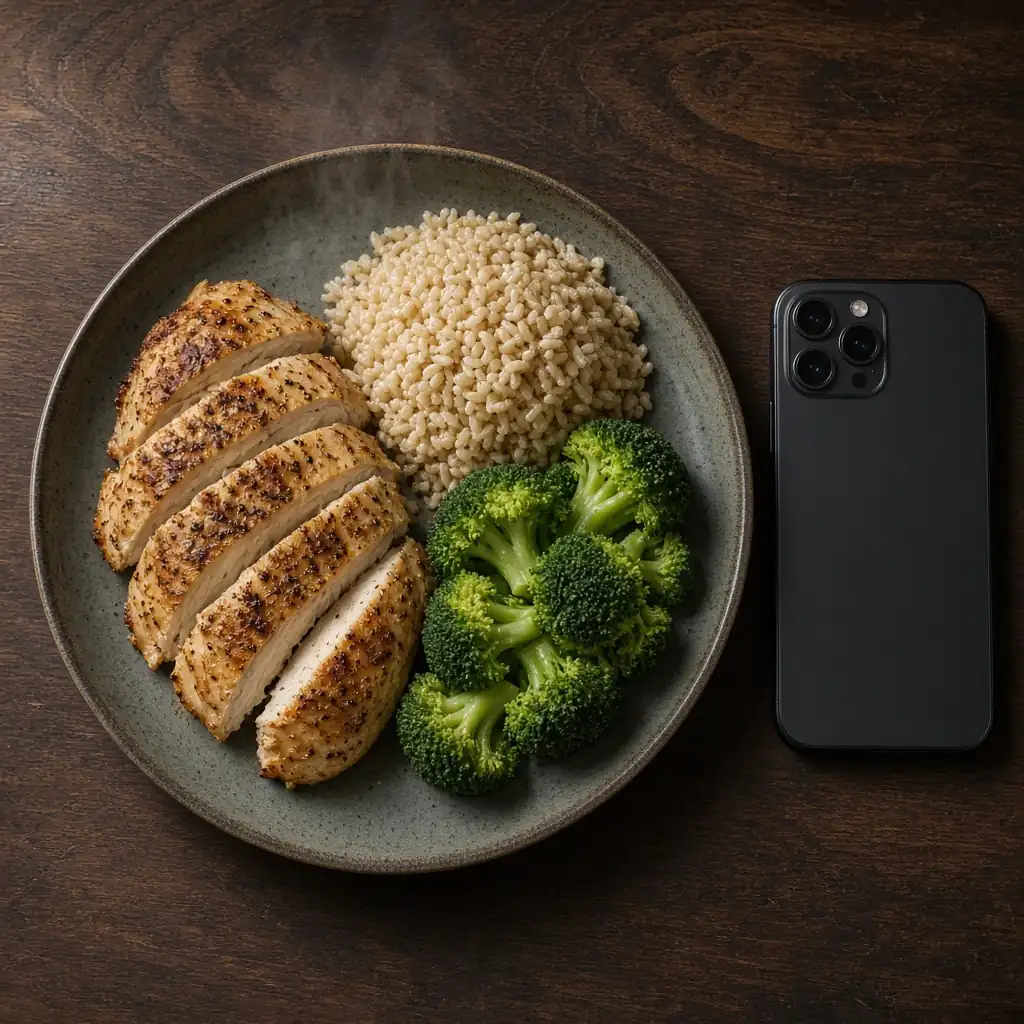
🧑🍳RecipesHow to Log Restaurant and Takeout Meals
A practical routine for logging meals you did not cook: photograph the plate when it arrives, add the oils and sauces you cannot see, and use a menu when one exists.
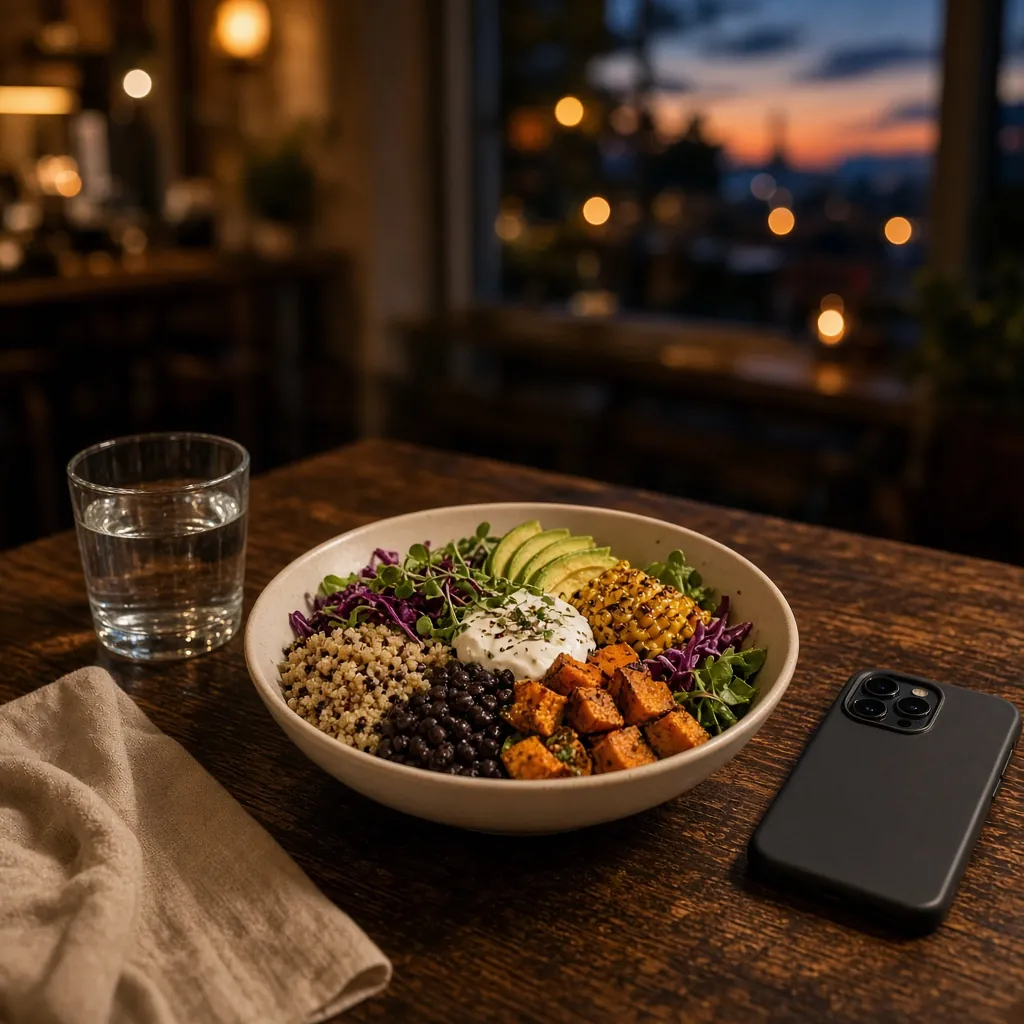
Restaurant and takeout meals are some of the hardest items to log, not because the idea is complicated, but because so much of the energy is out of view. Oil in the pan, butter on the vegetables, dressing on the side that still ends up on the salad, and portions that are larger than a home plate all sit outside a simple search for the name of the dish.
You can still make a useful log. The routine is the same one in how to track calories from a photo, with a few extra checks for hidden fats, shared plates, and drinks. The result is an estimate you review, not a laboratory value. That is enough to keep the day honest.
Why restaurant plates are harder to log
At home, you can weigh the chicken, measure the rice, and add the teaspoon of oil you poured. In a restaurant, those steps are usually not available. The kitchen may use more oil than you would at home. A sauce may be built on butter. A sandwich may hold more cheese than the menu photo suggests.
Official databases still help, because they give you a starting point for the foods you can name. USDA FoodData Central lists many single foods and some mixed dishes, always for a stated weight. A 3-ounce cooked portion of farmed Atlantic salmon in FDC 175168 is 85 grams and provides 175 kcal and 18.8 g of protein, calculated from the per-100-gram values. That is a useful anchor if the fillet on your plate looks close to that size. It will not include the butter sauce that was spooned on top.
The same warning applies to oil. FDC 171413 lists 1 tablespoon of olive oil (13.5 grams) at 119 kcal and 13.5 grams of fat. A kitchen that coats a skillet generously can add that amount without leaving a puddle you would notice in a photograph.
Snap the plate when it arrives
Take the picture before you start eating, with the whole plate in the frame. Include sides, bread, and anything sitting on a small dish nearby. A photo taken after the first few bites has to reconstruct food that is already gone, which is much harder for mixed dishes.
Use the best light you have. Restaurant lighting is often dim or warmly colored, which makes similar foods harder to tell apart. If you can, include the edge of the plate or a piece of cutlery as a size reference. Then, in the app, review the list of foods rather than accepting the first total. In ChefGPT, you snap a photo of the food to log it and then look at the calorie and macro breakdown item by item.
If the table is sharing several plates, photograph your portion after it has been served to you, not the platter in the middle of the table. The log should describe what you ate, not the whole order.
Identify each component, then add oils, sauces, and dressings
Start with the obvious pieces: the protein, the grain or potato, the vegetables, the bread. Correct any item the photo mixed up. A grain bowl can look like rice when it is quinoa, or the other way around; the macros are not the same. Cooked quinoa in FDC 168917 is 120 kcal per 100 grams, with 4.4 grams of protein, while cooked long-grain brown rice in FDC 169704 is 123 kcal per 100 grams, with 2.74 grams of protein.
Then add what the camera cannot see:
- Cooking oil or butter in the pan or on the vegetables
- Dressing, mayonnaise, cream sauces, and cheese
- Sugar in drinks, including milk, juice, and cocktails
- Fried coatings, which add both fat and carbohydrate
If you watched the cook finish the dish, or if the menu describes it as "buttered" or "crispy," add a fat source even when the plate looks dry. A modest, clearly labeled estimate is better than a log that pretends the sauce was not there.
Use a menu or a chain nutrition sheet when one exists
Some restaurants, especially larger chains, publish nutrition information for standard menu items. When that sheet exists and you ordered the standard item, it is usually the better source for the whole dish. Use it the way you would use a packaged-food label: check the serving size, then the calories and macros, as the FDA describes.
If you changed the order — extra sauce, a different dressing, a side swap, or a larger size — adjust the entry. The published figure describes the standard plate, not every variation.
When no published sheet exists, build the log from components, using FoodData Central or a similar database, and note that the portions are estimates. That is still more useful than skipping the meal, which makes the rest of the day harder to interpret.
Shared plates, appetizers, and drinks
Shared platters are easier if you log after the food has been divided. If you ate a third of a pizza, log a third, not the whole pie. If you tasted a friend's dessert, add a small portion rather than ignoring it or logging a full slice.
Appetizers and bread baskets are easy to forget because they arrive before you have decided to take a photo. If they were part of the meal, they belong in the log. Drinks do too. A glass of juice, a large latte, or an alcoholic drink can be in the same calorie range as a side dish, and they rarely appear clearly in a photo of the plate.
If you eat from the same restaurant often, save a corrected entry for your usual order so the next visit is mostly a review, not a new build.
A walk-through of a mixed bowl
Imagine a grain bowl with a scoop of grains, roasted vegetables, beans, and a creamy dressing. A photo can usually identify the main parts. It will not reliably measure the dressing or the oil on the vegetables.
A reasonable log might start with a cup of cooked grain, a serving of beans, and a pile of vegetables, using official cup weights where they exist — for example, 1 cup of cooked black beans is 172 grams in FDC 173735. Then add a stated amount of dressing or oil. If you do not know the amount, add a tablespoon of a similar fat and mark it as an estimate, remembering that one tablespoon of olive oil is already 119 kcal in FDC 171413.
You will not get a perfect number. You will get a log that includes the parts of the meal most often missed. For the rest of the day, that is the information you need.
If the bowl came from your own kitchen instead, log it as a recipe, as in how to log homemade recipes and leftovers. For ideas of what to serve with a vegetable stir-fry at home, the existing post what to serve with vegetable stir-fry is a side-dish guide, not a logging guide.
Download ChefGPT
ChefGPT is an AI calorie tracker for iPhone and Android. Snap a photo of your food to log it, review the calorie and macro breakdown, and add the oils, sauces, and drinks the picture does not show.