🧑🍳RecipesHow to Log Homemade Recipes and Leftovers
Log a homemade recipe once, divide it by the portions you actually serve, and use that same entry for leftovers the next day.
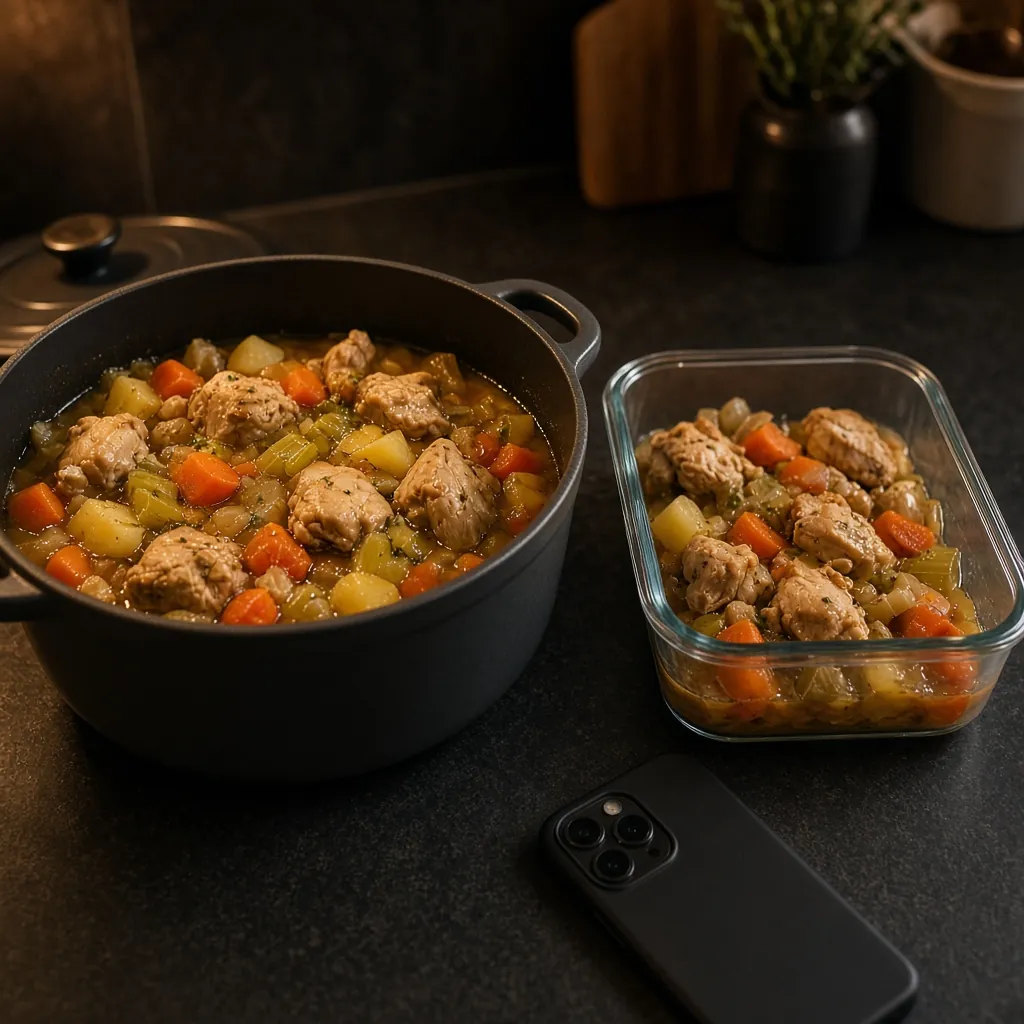
The most reliable way to log a homemade meal is to record the whole recipe, then log the portion you ate. That method works for a soup, a tray of roasted vegetables, a pan of lasagna, or a skillet dinner, and it works again the next day when the leftover is sitting in a container.
This is a logging guide, not another list of leftover recipes. The blog already has dishes such as what to do with leftover vegetable stir-fry. The question here is how to get those meals into a calorie and macro log without guessing each time. It pairs with how to track calories from a photo and with how to use an AI recipe generator if the recipe itself started from ingredients you already had.
Log the whole recipe once, then log a portion
Start by entering every ingredient and the amount that went into the pot or pan, including oil, salt, and anything you used to finish the dish. Use package labels where they exist, and USDA FoodData Central for unlabeled foods, with a stated weight.
When the cooking is done, decide how you will divide the batch. The two usual methods are:
- Count equal servings. If the lasagna is cut into eight pieces and you ate one, log one eighth of the recipe.
- Weigh the finished batch. If a pot of stew weighs 1,600 grams after cooking and you serve 400 grams, log one quarter of the recipe.
The second method is more robust when the pieces are not the same size. A kitchen scale is the tool that makes it easy. Write down the batch weight once, while the pot is still out, so you are not reconstructing it later.
Save the recipe with those ingredients and the batch yield. The next time you serve it, you only need to log the portion.
Weigh or measure the finished batch
Raw weights and cooked weights are not always the same. Meat loses water as it cooks; grains and pasta absorb water. Official databases usually specify the state of the food, such as "cooked, roasted" or "cooked, boiled." Use the entry that matches the state you weighed.
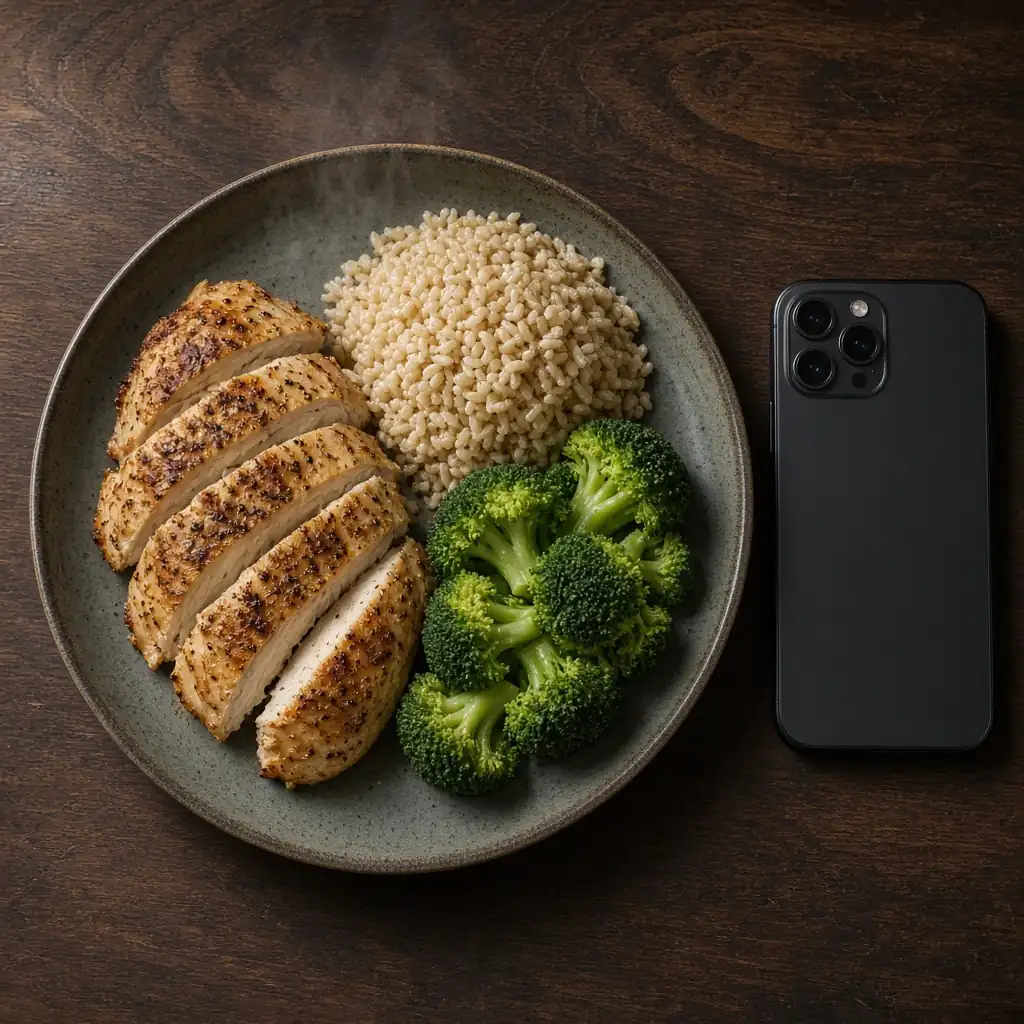
A clear example is chicken. FDC 171477 is roasted chicken breast, meat only, at 165 kcal and 31.02 grams of protein per 100 grams. Half a breast, bone and skin removed, is listed as 86 grams, which comes to 142 kcal and 26.7 grams of protein. If you weigh the meat after roasting, use this cooked entry. If you only have the raw weight, look up the raw entry instead of reusing the roasted figures.
The same care applies to grains. Cooked long-grain brown rice in FDC 169704 is 123 kcal per 100 grams, and 1 cup is 202 grams. Logging a cup of uncooked rice with the cooked entry would overstate the portion.
If you scale a recipe up or down, keep the ingredient ratios the same and record the new batch weight. The portion is always a fraction of that batch, not a memory of last week's slice.
Include oil, salt, and anything in the pan
The ingredient list should describe the recipe as it was cooked, not as a leaner version you wish you had made. Oil is the item most often left out, and it is also one of the most energy-dense. FDC 171413 lists 1 tablespoon of olive oil (13.5 grams) at 119 kcal and 13.5 grams of fat. If that tablespoon went into the pan, it belongs in the recipe even if it does not show as a pool on the leftover portion.
The same is true of butter, finishing sauces, cheese sprinkled on top, and any liquid that cooked down into the dish. If it went into the pot, it is part of every serving, including the leftover.
Salt does not add calories, but it still belongs in the recipe if you want the method to be complete. What the log needs for energy and macros are the foods that contribute protein, carbohydrate, or fat.
Leftovers the next day: same recipe, new portion
When you reheat yesterday's dinner, do not build a new recipe from a photograph if you already have the entry. Open the saved recipe and log the portion you are about to eat. If you weigh the container, subtract the empty container weight so you are logging only the food.
If you add something new — a handful of salad, a slice of bread, a drizzle of oil — add those as extra items. They were not in the original batch, so they should not be folded silently into the leftover portion.
If you mix two leftovers on the same plate, log each one as its own portion of its own recipe. A photo can help you remember what was on the plate, but the numbers should still come from the saved entries.
When yesterday's photo is good enough, and when it is not
A photo of a leftover container can be a useful reminder, and it can start a log in ChefGPT the same way any other meal photo can. Review the calorie and macro breakdown, then switch to the saved recipe if you have one. A container viewed from above is a poor source for portions, because the same stew can look shallow or deep depending on the box.
Use a fresh photo when the leftover has been combined with new foods, when you no longer remember which recipe it is, or when you are eating only part of a mixed plate. Use the saved recipe when the food is the same batch you already recorded.
Either way, save the log to the day so the totals stay comparable with your nutrition goals. If leftovers are part of a weekly pattern, they can be written into a weekly meal plan around your calories and macros on purpose, rather than appearing as a surprise lunch.
Food safety for storage and reheating
Logging leftovers only helps if the food itself is handled safely. The USDA Food Safety and Inspection Service recommends refrigerating leftovers within 2 hours of cooking (1 hour if the temperature is above 90°F), dividing large amounts into shallow containers so they cool, and keeping leftovers in the refrigerator for 3 to 4 days. Reheat leftovers to 165°F, measured with a food thermometer. Those figures are safety guidance, not nutrition figures, and they are not a substitute for medical advice.
If you are not sure how long a container has been in the refrigerator, do not log it — do not eat it. The log can wait.
You can also store leftover food in a frozen state for longer keeping; FSIS notes that leftover food kept this way can be held for 3 to 4 months for quality, and should still be reheated to 165°F. Use a method that keeps the food out of the temperature range between 40°F and 140°F, which FSIS describes as the range where bacteria grow rapidly.
Download ChefGPT
ChefGPT is an AI calorie tracker for iPhone and Android. Snap a photo of your food to log it, save a homemade recipe with its calorie and macro breakdown, and log a leftover portion the next day.