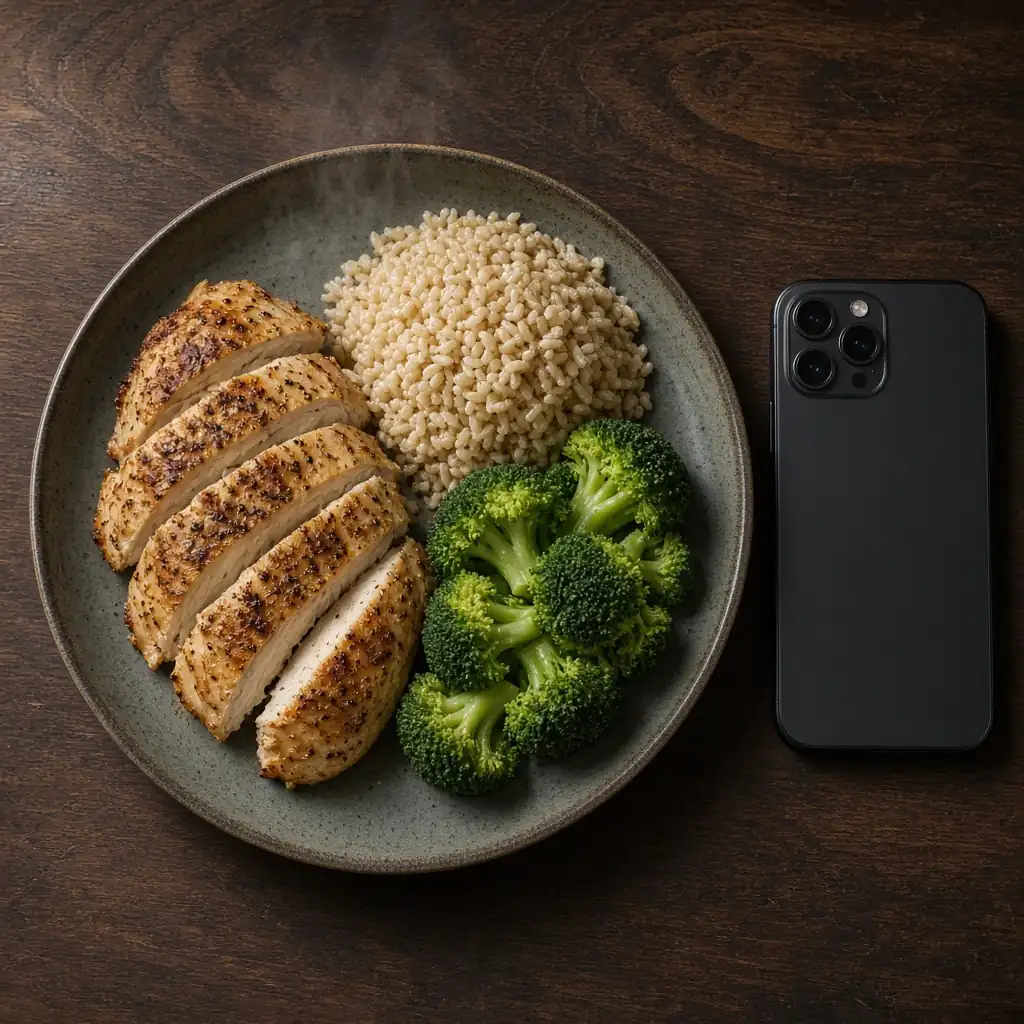
🧑🍳RecipesHow to Use an AI Recipe Generator With the Ingredients You Have
How an AI recipe generator works, how to start from the ingredients in your kitchen, and how to treat the result as a draft you can cook and then log.
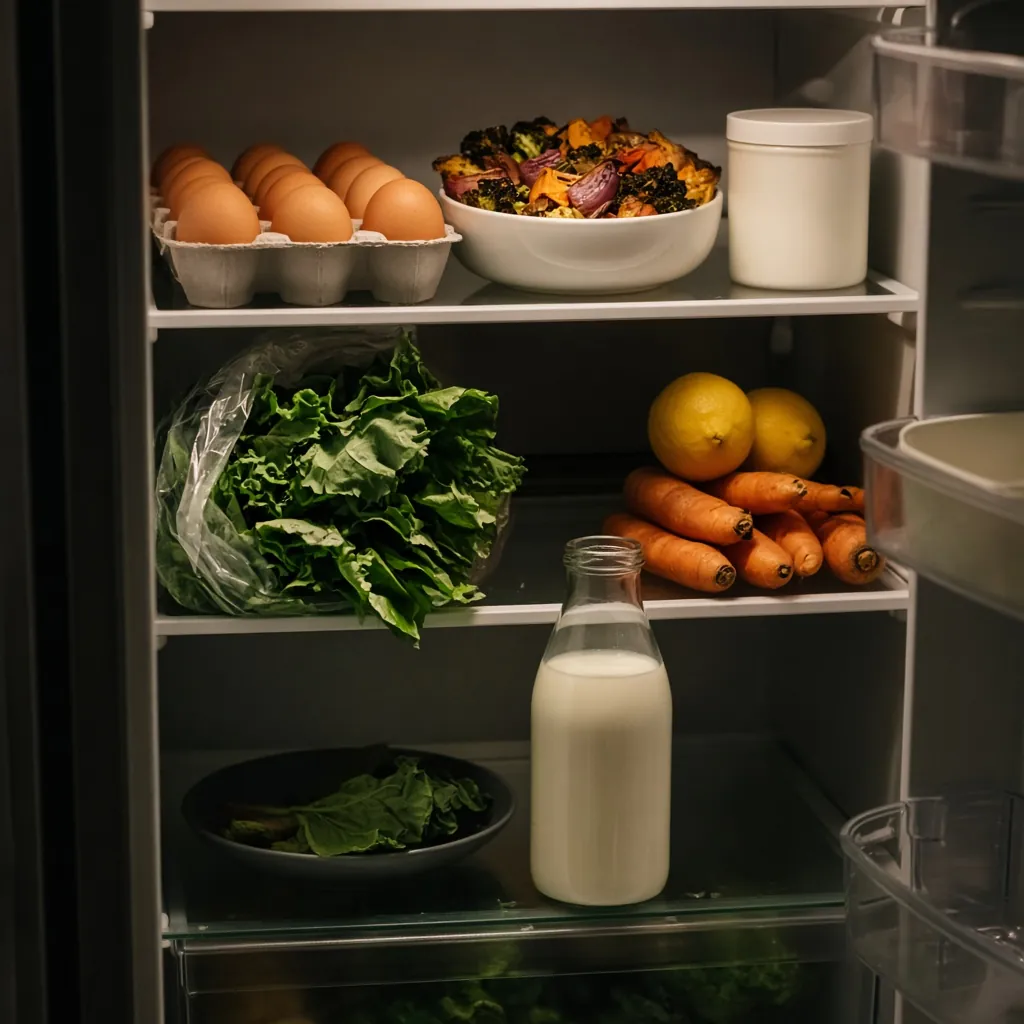
An AI recipe generator starts from what you already have. You list the ingredients in the fridge or pantry, add a few constraints if you want them, and get a draft recipe built around that list. That is a different job from searching a website for a dish you already have in mind. Search looks for a recipe that already exists. A generator composes one around your ingredients.
This post explains how to use that kind of tool well: how to get the ingredients in carefully, which constraints are worth adding, and how to read the draft like a cook. It is written for home cooking, not for laboratory work, and it stays next to the rest of this series on logging meals. If you want ideas for busy nights once you have a recipe, healthy one-pan dinners for busy weeknights is a useful companion.
What an AI recipe generator does
In plain terms, the generator takes your ingredients and writes a structured recipe: a title, a list of amounts, a method, and often a serving size or timing. Some tools also let you start from a photo of the ingredients rather than a typed list. In ChefGPT, this sits alongside recipes from the ingredients you have and the broader recipe tools.
The important habit is to treat the output as a draft. The model has learned patterns from a large amount of cooking writing, so it can usually propose a sensible order of steps and a plausible combination of flavors. It does not taste the food, check the temperature of your oven, or know whether the chicken in your fridge is already cooked. You still season to taste, cook meat and fish to a safe temperature, and read labels if you have an allergy.
A generator is at its best when the question is "what can I make with this?" rather than "recreate this exact restaurant dish." If you already have a family recipe you trust, log that recipe and cook it. If you have a half-used bunch of greens, a pot of rice, and a few eggs, a generator can suggest a path through them.
Start with what is actually in the kitchen
The quality of the draft depends on the quality of the ingredient list. Be specific, and list what is really there rather than what you wish you had bought.
A few practical tips:
- Name the food clearly. "Smoked paprika" is more useful than "spice." "Cooked brown rice" is more useful than "leftovers."
- Lead with a protein or a base when you have one: eggs, beans, tofu, chicken, fish, pasta, or rice. A list of garnishes alone is harder to turn into a meal.
- Include staples you are willing to use, such as oil, onions, garlic, or soy sauce, if they are in the kitchen. Leave them out if they are not.
- If you start from a photo of the fridge or a counter, review the detected list and add anything that was hidden, unlabeled, or in a drawer. A photo is a draft of the inventory, just as a meal photo is a draft of a food log.
You can also start from a leftover. Last night's roasted vegetables or a container of cooked grains can be the base of a new dish instead of a repeat of the same plate. When you do cook from leftovers, keep food safety in mind, and see how to log homemade recipes and leftovers if you want the new meal in your calorie log as well.
Add useful constraints
Once the ingredients are right, a short list of constraints helps the draft fit your evening:
- How many people you are cooking for
- How much time you have
- Allergens or ingredients you need to avoid
- A cuisine or a cooking method you are in the mood for
- Equipment you actually have, such as a sheet pan or a single skillet
Keep the list short. A generator can try to honor many rules at once, but a long wish list can push it toward odd combinations or toward ingredients you did not provide. If something required is missing, a good draft will say so, or it will ask you to add a staple. If the draft quietly adds three items you do not have, edit the request and generate again, or swap in what you do have.
Allergies deserve extra care. A tool can avoid ingredients you name, but it cannot read every label in your cupboard or know about cross-contact. If you have a serious allergy, read the full ingredient list yourself and use packaged foods only when the label is clear.
Read the draft like a cook
Before you turn on the stove, read the whole recipe once.
Check the amounts. Do they match what you have, and do they look proportional? A generator can propose a quantity that is larger than your remaining package. Adjust down, or scale the whole recipe.
Check the method. Does the order of steps make sense for your kitchen? Greens usually go in late. Garlic usually does not sit in a hot pan for a long time. If a step looks off, change it.
Check doneness and safety. The USDA Food Safety and Inspection Service recommends cooking all poultry to an internal temperature of 165°F, measured with a food thermometer, and cooking whole cuts of beef, pork, lamb, and veal to 145°F with a three-minute rest. Ground meats should reach 160°F. A generated recipe that says "cook until done" is a prompt to use those temperatures, not a substitute for them.
Then cook it the way you would cook any new recipe: taste as you go, and adjust salt, acid, and heat. The draft is there to get you started, not to replace your senses.
A short pantry example
Suppose you have a cup of cooked brown rice, a few eggs, and a head of broccoli, plus oil and salt. That is already a meal: a rice bowl or a skillet hash.
USDA FoodData Central is a useful place to look up the building blocks if you also want to log what you eat. Cooked long-grain brown rice (FDC 169704) is listed at 123 kcal per 100 grams, and 1 cup weighs 202 grams. Broccoli cooked, boiled, and drained without salt (FDC 169967) is 35 kcal per 100 grams. A large hard-boiled egg (FDC 173424) weighs 50 grams and provides 78 kcal and 6.3 grams of protein, calculated from 155 kcal and 12.58 grams of protein per 100 grams. Olive oil (FDC 171413) is 119 kcal per tablespoon (13.5 grams).
Those figures describe the ingredients, not a finished restaurant dish. If you scramble two eggs, warm half a cup of the rice, and cook a generous handful of broccoli in a teaspoon of oil, you can add those amounts in the log after you cook. The generator's job was only to help you decide what to make. The log's job is to record what you actually ate.
After you cook, log the meal
A recipe is more useful if it stays next to its nutrition. Once you are happy with the dish, save it as a recipe with the ingredients and amounts you used, then log the portion you ate. That is the same method described in how to log homemade recipes and leftovers. If you are still getting used to logging from a picture, how to track calories from a photo covers the photo routine.
You can also plan from this point. If the dish worked and you have enough ingredients to make it again, it can become one of the repeating meals in a weekly plan built around your calories and macros. A generator is a way to start. A saved recipe is how the idea becomes part of the week.
Download ChefGPT
ChefGPT is an AI calorie tracker for iPhone and Android. Snap a photo of your food to log it, generate recipes from the ingredients you have, and keep those meals next to their calorie and macro breakdown.