🧑🍳RecipesFood Swaps That Help You Hit Your Protein Goal
Same-slot food swaps, with USDA-sourced calories and protein for both sides, so you can raise protein without inventing a new diet.
A food swap is a same-slot exchange: you keep the meal, and you change one item for another that contributes more protein. It is not a new diet, and it is not a promise about body weight. It is a way to use the log you already have.
The figures below come from USDA FoodData Central and the official portion weights in each entry. Totals are calculated from the per-100-gram values, then rounded to the nearest calorie and to one decimal place for grams. For the wider method of setting a protein range, see how to set nutrition goals. For full plates rather than single swaps, see 10 high-protein meals.
A swap is an exchange, not a new menu
The useful test is whether you would actually eat the new item in the same moment of the day. Swapping toast for yogurt only helps if yogurt is a breakfast you will repeat. Swapping an apple for almonds only helps if a small handful of nuts is a snack you like.
Log both versions at least once so you can see the difference in the daily total, not only on the page. In ChefGPT, you can snap a photo of either plate, then review the calorie and macro breakdown and correct the portions to match the official weights below.
Breakfast: two slices of toast, or yogurt and a banana
Two slices of commercially prepared whole-wheat bread (32 grams each, 64 grams total) from FDC 172688: 161 kcal, 8.0 g protein, 2.2 g fat, 27.3 g carbohydrate.
170 grams of plain nonfat Greek yogurt from FDC 330137 plus one medium banana (118 grams) from FDC 173944: 209 kcal, 18.8 g protein, 1.0 g fat, 33.1 g carbohydrate.
The yogurt breakfast is a little higher in calories and much higher in protein: 18.8 grams against 8.0 grams. If you prefer to keep the toast, add two large eggs instead of swapping the bread away. Two large hard-boiled eggs (100 grams) from FDC 173424 provide 155 kcal and 12.6 g protein, which raises the toast breakfast to 316 kcal and 20.5 g protein, as in the high-protein meals post.
Breakfast or snack: toast, or a cup of cottage cheese
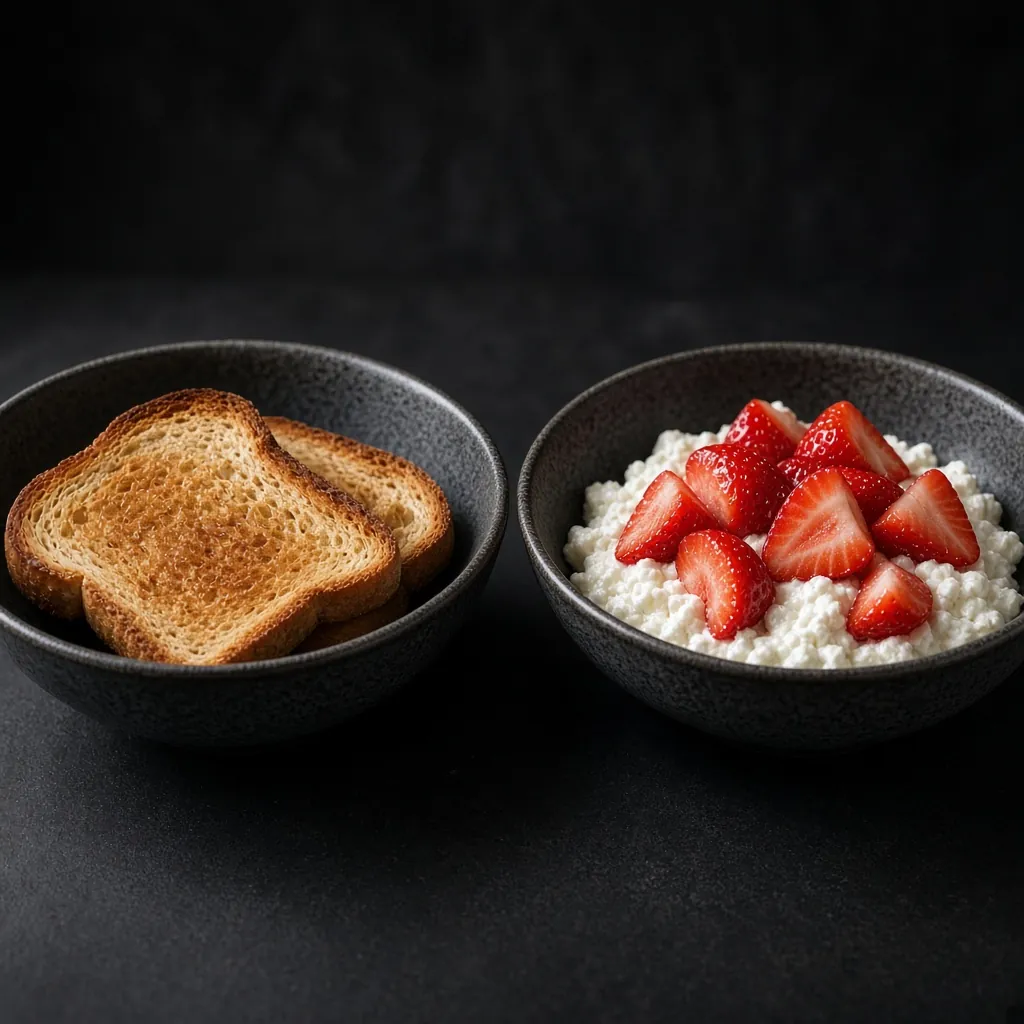
Two slices of toast, as above: 161 kcal and 8.0 g protein.
1 cup of low-fat (1% milkfat) cottage cheese, not packed (226 grams) from FDC 173417: 163 kcal, 28.0 g protein, 2.3 g fat, 6.1 g carbohydrate.
The calorie figures are almost the same; the protein figures are not. 28.0 grams against 8.0 grams is one of the larger swings in this list. If you want fruit with the cottage cheese, 1 cup of sliced strawberries (166 grams) from FDC 167762 adds 53 kcal and 1.1 g protein, for a bowl of 216 kcal and 29.1 g protein.
Lunch: a cup of rice, or a cup of lentils with half a cup of rice
1 cup of cooked long-grain brown rice (202 grams) from FDC 169704: 248 kcal, 5.5 g protein, 2.0 g fat, 51.7 g carbohydrate.
1 cup of boiled lentils, without salt (198 grams) from FDC 172421 plus half a cup of the same brown rice (101 grams): 354 kcal, 20.6 g protein, 1.7 g fat, 65.7 g carbohydrate, before any oil. With 1 teaspoon of olive oil (4.5 grams) from FDC 171413, the lentil bowl matches the 394 kcal and 20.6 g protein plate in the high-protein meals post.
You are not removing carbohydrate from lunch. You are adding a protein-rich legume and reducing the rice so the plate still has a grain. The protein rises from 5.5 grams to about 21 grams.
Dinner: a larger serving of rice, or a standard serving of chicken and less rice
1 cup of cooked brown rice (202 grams), as above: 248 kcal and 5.5 g protein.
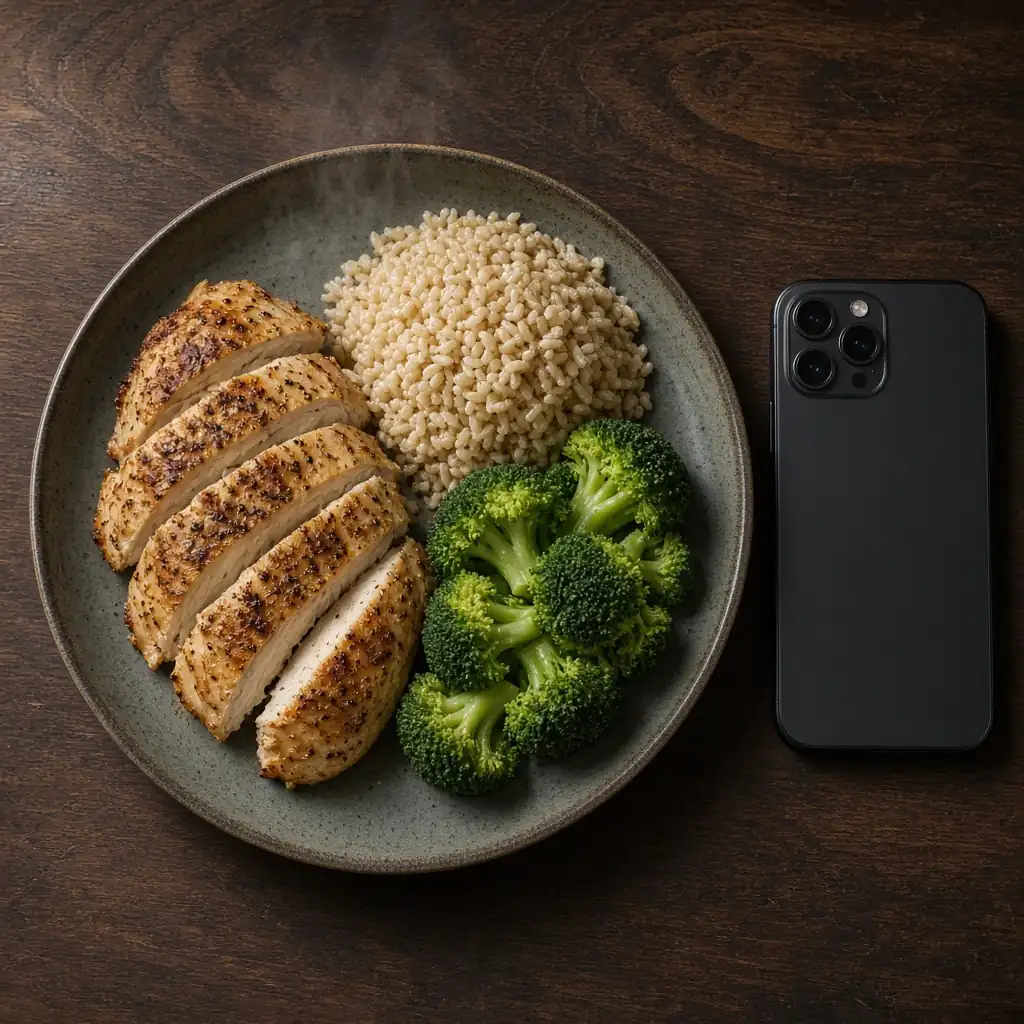
Half a roasted chicken breast, meat only, 86 grams, from FDC 171477 plus half a cup of brown rice (101 grams): 266 kcal, 29.4 g protein, 4.1 g fat, 25.8 g carbohydrate, before vegetables or oil.
The calorie totals are in a similar range. The protein totals are not. Adding the official broccoli and oil from the high-protein meals post brings the chicken dinner to 361 kcal and 33.2 g protein, which is a complete plate rather than a swap of a single item.
Snack: a medium apple, or an ounce of almonds
1 medium raw apple with skin (182 grams) from FDC 171688: 95 kcal, 0.5 g protein, 0.3 g fat, 25.1 g carbohydrate.
1 ounce of almonds (28.35 grams, about 23 kernels) from FDC 170567: 164 kcal, 6.0 g protein, 14.2 g fat, 6.1 g carbohydrate.
This swap raises protein and also raises fat and calories. It is a good example of why you should look at more than one number. If the rest of the day is already rich in fat, the apple may still be the better snack. If protein is the gap and you have room in the calorie total, the almonds close more of that gap.
How to log the "before" and the "after"
Log the original item on one day and the swapped item on another, using the same official weights, so the daily totals are comparable. If you eat both in the same week, you will see the protein change without guessing.
The FDA Nutrition Facts label guidance still applies when the swap is a packaged food: start with the serving size, then the calories and the protein grams. For unlabeled foods, FoodData Central and a stated gram weight are the sources used here.
A swap only helps if it shows up in the log. If you change breakfast but forget to record it, the daily total will not move, and it will be hard to tell whether the new habit is doing any work. For the wider habit of planning these meals into a week, see how to build a weekly meal plan around your calories and macros. For the mechanics of the log itself, see how to track macros.
Download ChefGPT
ChefGPT is an AI calorie tracker for iPhone and Android. Snap a photo of your food to log it, review the calorie and macro breakdown, and compare a swapped breakfast or snack with the rest of the day.