🧑🍳RecipesWhat Macros Are and How to Track Them
A beginner-friendly guide to protein, carbohydrate, and fat, the official energy values for each, and a straightforward way to log them.
Macros, short for macronutrients, are the three nutrients that provide most of the energy in food: protein, carbohydrate, and fat. Tracking them means recording the grams of each one in the foods you eat, usually alongside calories, so you can see how a day adds up.
You do not need to hit every gram on the nose. The point of a log is to make the pattern visible. This post explains what the three macros are, how official energy values work, how to read them on a label, and how to log a simple meal with figures from USDA FoodData Central. It sits next to how to track calories from a photo and how to set nutrition goals you can actually log.
Macros in plain language
Protein is found in foods such as meat, poultry, fish, eggs, dairy, beans, lentils, tofu, and some grains. Your body uses it to build and repair tissues. In a daily log, protein is the macro many people watch most closely because it is easy to under-eat if the day is built mainly on refined grains and fats.
Carbohydrate is found in grains, fruit, starchy vegetables, beans, milk, and sugars. It is the body's usual source of readily available energy. Fiber is also counted within carbohydrate in U.S. labeling, even though it is not fully digested.
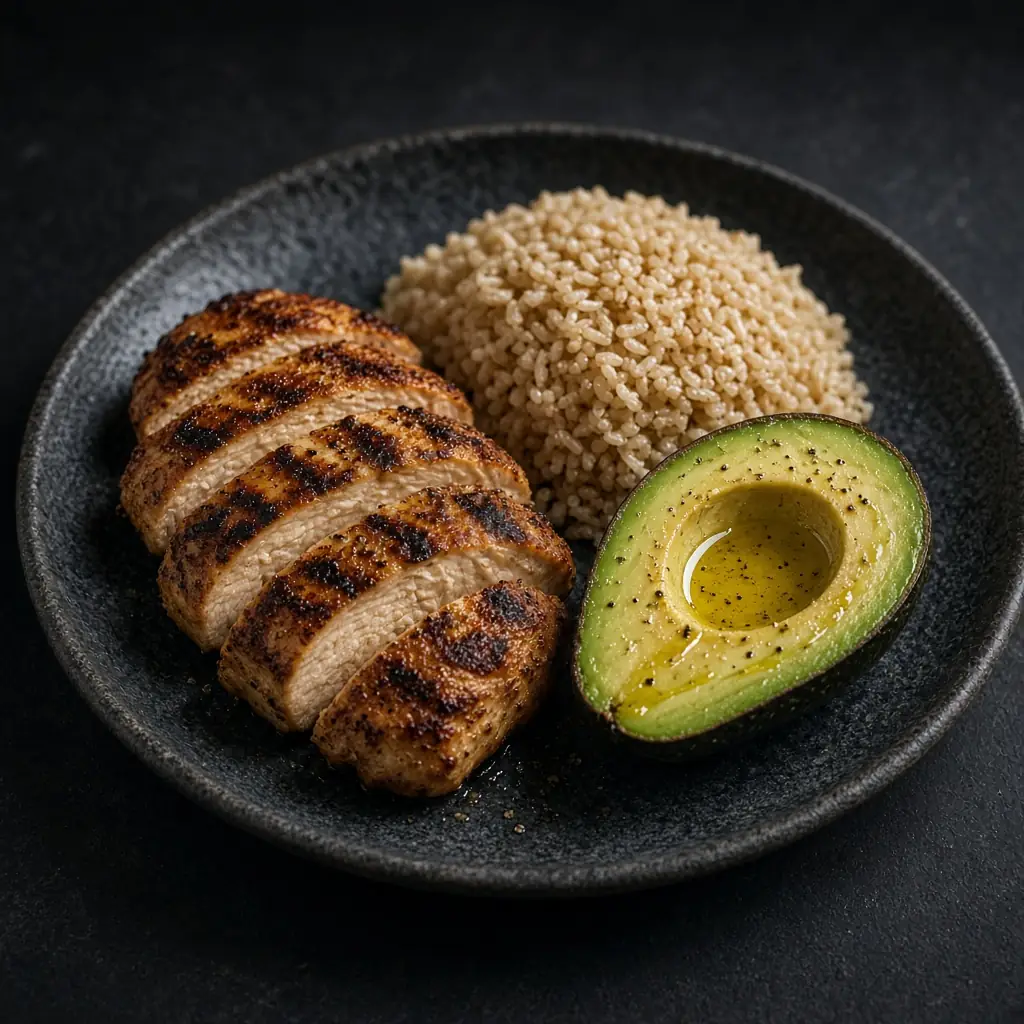
Fat is found in oils, butter, nuts, seeds, avocado, fatty fish, and the fat in meat and dairy. It provides energy in a more concentrated form than protein or carbohydrate, and it carries fat-soluble vitamins.
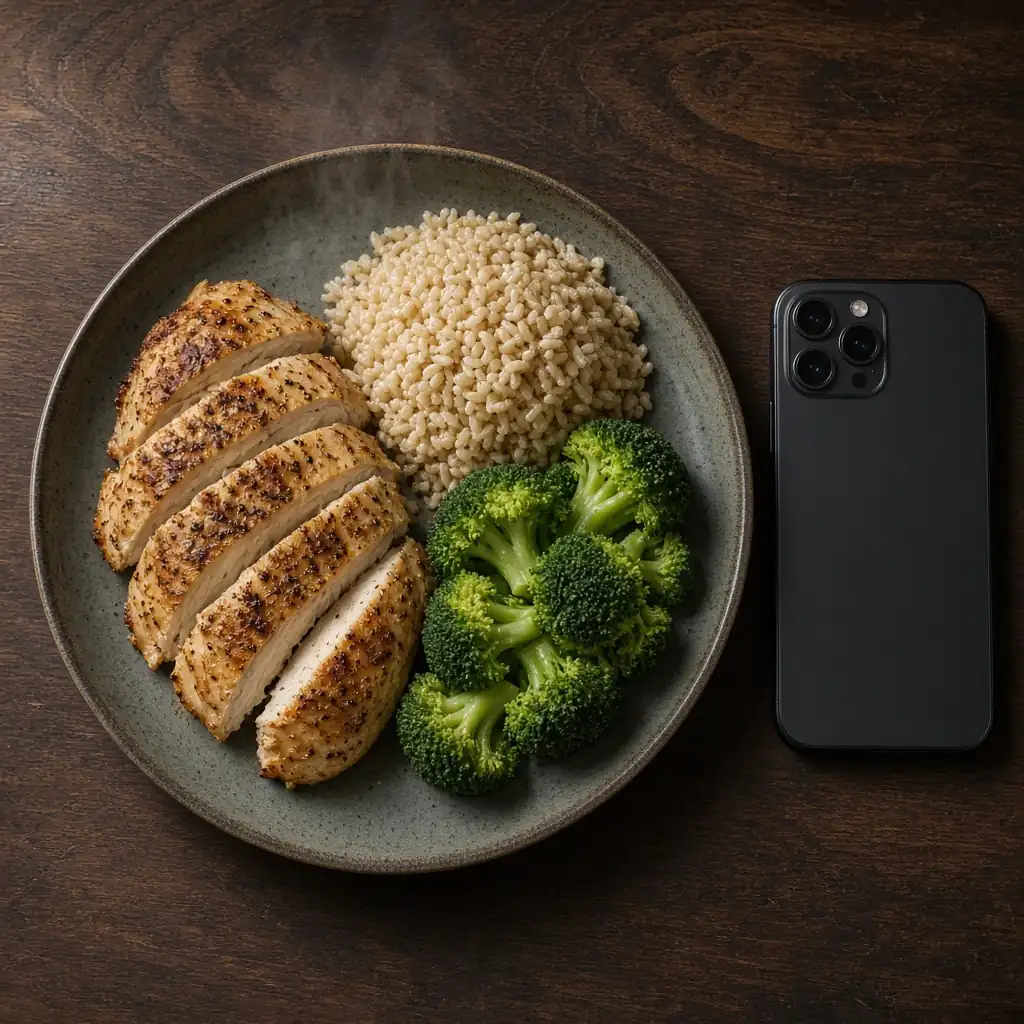
Most mixed meals contain all three. A plate of chicken, rice, and broccoli cooked in oil is a clear example: the chicken is mostly protein, the rice is mostly carbohydrate, the broccoli contributes a little of each, and the oil is fat. The log simply adds them together.
Alcohol also provides energy, but it is not one of the three macros discussed here. If you drink, log those items separately so the daily calorie total stays honest.
The energy values: 4, 4, and 9
Calories in food are not guessed in isolation. They are tied to the macros through a system developed at USDA and known as the Atwater factors. As the USDA Agricultural Research Service describes it, protein and carbohydrate are estimated, on average, to provide 4 calories per gram, and fat is estimated to provide 9 calories per gram.
Those averages are why a tablespoon of oil can have a similar calorie count to a much larger portion of a lean protein or a cooked grain. The oil is almost entirely fat. Using the same official factors, you can also work backwards from a calorie budget into a range of grams, which is the method used in how to set nutrition goals.
The numbers on a Nutrition Facts label and in FoodData Central already include these energy values. You do not have to multiply grams by 4 and 9 for every food unless you want to check the arithmetic. It is still useful to remember the factors, because they explain why small amounts of oil, nut butter, or cheese move the calorie total more than they appear to on the plate.
How to read protein, carbs, and fat on a label
For packaged foods, start with the Nutrition Facts label. The FDA recommends reading the serving size first. Everything else on the label — calories, protein, carbohydrate, and fat — refers to that serving. If you eat one and a half servings, multiply the listed amounts by 1.5.
Then look at:
- Calories, for the energy in that serving
- Total fat, in grams
- Total carbohydrate, in grams, which includes fiber and sugars
- Protein, in grams
The label also shows % Daily Value. The FDA describes 5% Daily Value or less as low, and 20% or more as high. That is helpful context, but your log should still use the gram amounts and the calories, because Daily Values are set for a reference diet and may not match your own targets.
If there is no label, as with a piece of fruit, a fresh chicken breast, or a home-cooked stew, use a database entry such as FoodData Central and a stated portion. Weigh the food when you can. Household measures, such as a cup or a tablespoon, are the next best option when they are the official measures listed in the database.
How to log a meal so the macros add up
A practical routine looks like this:
- List every item in the meal, including oil, sauces, and drinks.
- Choose a source for each item: a label, a FoodData Central entry, or a saved recipe.
- Enter the amount you actually ate, not the amount you meant to serve.
- Check the meal total for calories, protein, carbohydrate, and fat.
- Save it to the day, then look at the daily total rather than judging one plate in isolation.
In ChefGPT, you can snap a photo of the food to start that list, then review the calorie and macro breakdown and add anything the picture missed. The review step is the same one described in how to track calories from a photo. You can also log from a recipe or a label when that is the better source. The macros feature page is the product view of this idea.
You do not have to track every snack with the same level of detail on day one. Many people start with the meals they eat most often, get those entries right, and then fill in the rest of the day.
A worked USDA example
Here is a simple home plate, with every figure calculated from FoodData Central values and official portion weights.
- Half a roasted chicken breast, meat only, bone and skin removed, 86 grams, from FDC 171477: 142 kcal, 26.7 g protein, 3.1 g fat, 0 g carbohydrate.
- Half a cup of cooked long-grain brown rice, 101 grams, from the 202-gram cup listed in FDC 169704: 124 kcal, 2.8 g protein, 1.0 g fat, 25.8 g carbohydrate.
- Two half-cup servings of chopped boiled broccoli without salt, 156 grams, from the 78-gram half cup in FDC 169967: 55 kcal, 3.7 g protein, 0.6 g fat, 11.2 g carbohydrate.
- 1 teaspoon of olive oil, 4.5 grams, from the 13.5-gram tablespoon in FDC 171413: 40 kcal, 0 g protein, 4.5 g fat, 0 g carbohydrate.
Meal total, summed from those unrounded amounts and then rounded: 361 kcal, 33.2 g protein, 9.2 g fat, and 37.0 g carbohydrate.
That is one meal, not a daily target. If your protein goal for the day is higher than 33 grams, the rest of the day still has work to do. If it is lower, this plate may already be doing most of it. The log is what lets you see the difference. For a longer set of worked plates, see 10 high-protein meals, with calories and macros from USDA data.
You do not need to hit every gram exactly
Targets are ranges, not a test. The official Acceptable Macronutrient Distribution Ranges, described in the next post, are themselves wide bands, not single numbers. A day that lands a little over or under a personal gram target is still a useful day in the log.
What helps more than chasing a single gram is consistency: logging the oil, logging the drinks, and using the same sources so that Tuesday can be compared with Wednesday. If a number feels off, look at the items, not only the total. The macros will only be as sound as the foods you entered.
When you are ready to choose the numbers you are logging against, continue with how to set nutrition goals you can actually log. If you want to turn those numbers into a week of meals, see how to build a weekly meal plan around your calories and macros.
Download ChefGPT
ChefGPT is an AI calorie tracker for iPhone and Android. Snap a photo of your food to log it, review the calorie and macro breakdown, and see how the day adds up.