🧑🍳Recipes10 High-Protein Breakfasts, With Calories and Macros From USDA Data
These ten breakfasts use everyday foods, with calories and macros calculated from USDA FoodData Central portion weights.
These ten breakfasts use everyday foods, with calories and macros calculated from USDA FoodData Central portion weights. Each item below uses official USDA portion weights rather than invented figures. In ChefGPT, you snap a photo of your food to log it and then review the calorie and macro breakdown before it is added to your day. It pairs with ten high-protein meals with USDA data, and how to track macros.
How these numbers were sourced
Each ingredient uses a FoodData Central identifier, a stated weight, and per-100-gram values. Meal totals sum the unrounded amounts, then round to the nearest calorie and to one decimal place for grams. Figures come from USDA FoodData Central and were accessed 10 November 2026. To change a portion, divide the grams you serve by 100 and multiply the per-100-gram figures.
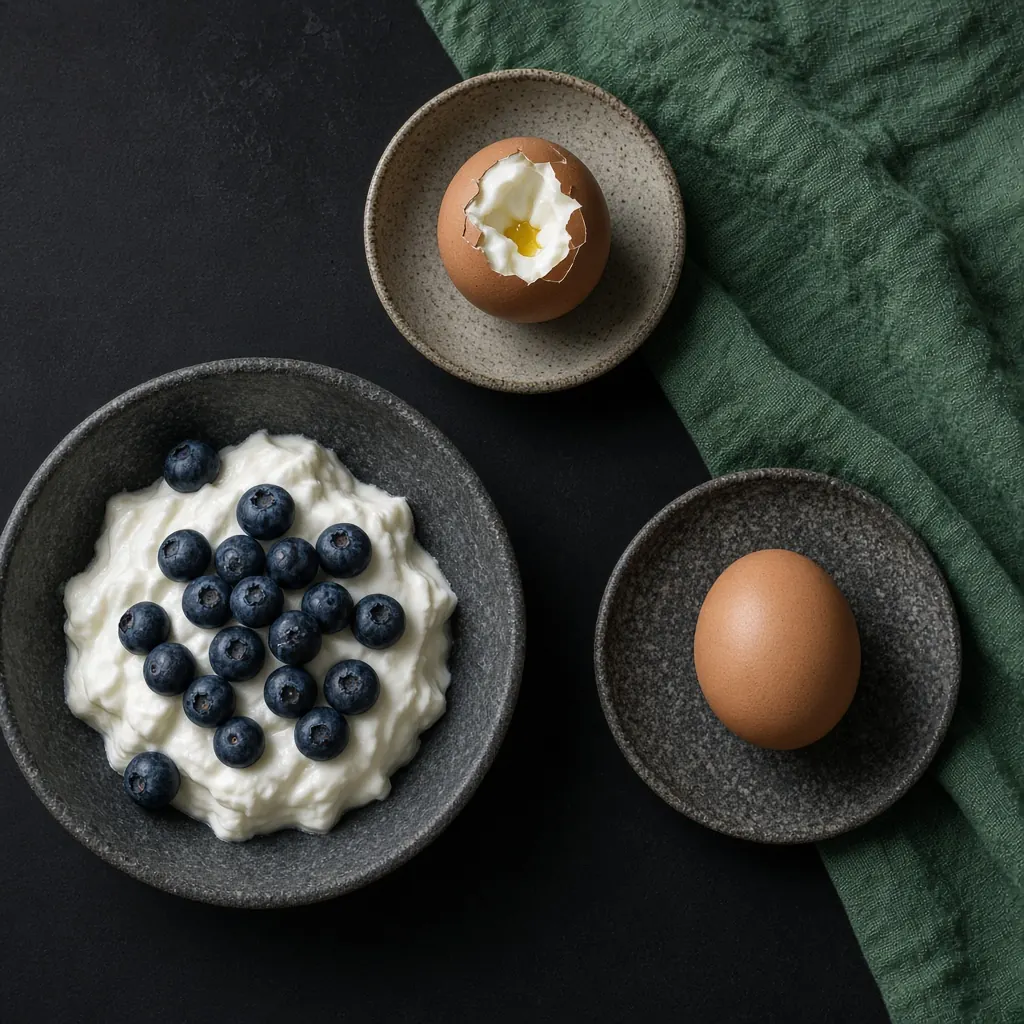
1. Nonfat Greek yogurt with blueberries
- 170 grams plain nonfat Greek yogurt, an official portion in FDC 330137: 104 kcal, 17.5 g protein, 0.6 g fat, 6.2 g carbohydrate.
- 1 cup of raw blueberries (148 grams) from FDC 171711: 84 kcal, 1.1 g protein, 0.5 g fat, 21.4 g carbohydrate.
Meal total: 188 kcal, 18.6 g protein, 1.1 g fat, 27.6 g carbohydrate.
2. Two large scrambled eggs and toast
- 2 large scrambled eggs (61 grams each, 122 grams total) from FDC 172187: 182 kcal, 12.2 g protein, 13.4 g fat, 2.0 g carbohydrate.
- 1 slice of commercially prepared whole-wheat bread (32 grams) from FDC 172688: 81 kcal, 4.0 g protein, 1.1 g fat, 13.7 g carbohydrate.
Meal total: 262 kcal, 16.2 g protein, 14.5 g fat, 15.6 g carbohydrate.
3. Cottage cheese with sliced strawberries
- 1 cup of low-fat (1% milkfat) cottage cheese, not packed (226 grams) from FDC 173417: 163 kcal, 28.0 g protein, 2.3 g fat, 6.1 g carbohydrate.
- 1 cup of sliced raw strawberries (166 grams) from FDC 167762: 53 kcal, 1.1 g protein, 0.5 g fat, 12.7 g carbohydrate.
Meal total: 216 kcal, 29.1 g protein, 2.8 g fat, 18.9 g carbohydrate.
4. Cooked oats with milk and almonds
- 1 cup of oats cooked with water (234 grams) from FDC 173905: 166 kcal, 5.9 g protein, 3.6 g fat, 28.1 g carbohydrate.
- 1/2 cup of 1% milk (122 grams; a cup is 244 grams) from FDC 170872: 51 kcal, 4.1 g protein, 1.2 g fat, 6.1 g carbohydrate.
- 1 ounce of almonds (28.35 grams) from FDC 170567: 164 kcal, 6.0 g protein, 14.2 g fat, 6.1 g carbohydrate.
Meal total: 382 kcal, 16.1 g protein, 18.9 g fat, 40.3 g carbohydrate.
5. Peanut butter toast and a large banana
- 2 slices of commercially prepared whole-wheat bread (32 grams each, 64 grams total) from FDC 172688: 161 kcal, 8.0 g protein, 2.2 g fat, 27.3 g carbohydrate.
- 2 tablespoons of smooth peanut butter (32 grams) from FDC 174266: 191 kcal, 7.1 g protein, 16.4 g fat, 7.1 g carbohydrate.
- 1 large banana (8 to 8-7/8 inches, 136 grams) from FDC 173944: 121 kcal, 1.5 g protein, 0.4 g fat, 31.1 g carbohydrate.
Meal total: 474 kcal, 16.6 g protein, 19.1 g fat, 65.5 g carbohydrate.
6. Lowfat Greek yogurt with raspberries
- 1 container (7 ounces, 200 grams) of plain lowfat Greek yogurt from FDC 170903: 146 kcal, 19.9 g protein, 3.8 g fat, 7.9 g carbohydrate.
- 1 cup of raw raspberries (123 grams) from FDC 167755: 64 kcal, 1.5 g protein, 0.8 g fat, 14.7 g carbohydrate.
Meal total: 210 kcal, 21.4 g protein, 4.6 g fat, 22.6 g carbohydrate.
7. Hard-boiled eggs with an apple
- 2 large hard-boiled eggs (50 grams each, 100 grams total) from FDC 173424: 155 kcal, 12.6 g protein, 10.6 g fat, 1.1 g carbohydrate.
- 1 medium apple (3-inch diameter, 182 grams) from FDC 171688: 95 kcal, 0.5 g protein, 0.3 g fat, 25.1 g carbohydrate.
Meal total: 250 kcal, 13.1 g protein, 10.9 g fat, 26.3 g carbohydrate.
8. Ricotta with pear
- 1/2 cup of part-skim ricotta (124 grams) from FDC 171248: 171 kcal, 14.1 g protein, 9.8 g fat, 6.4 g carbohydrate.
- 1 medium pear (178 grams) from FDC 169118: 101 kcal, 0.6 g protein, 0.2 g fat, 27.1 g carbohydrate.
Meal total: 273 kcal, 14.8 g protein, 10.1 g fat, 33.5 g carbohydrate.
9. Egg-white scramble and toast
- 3 large raw egg whites (33 grams each, 99 grams total) from FDC 172183: 51 kcal, 10.8 g protein, 0.2 g fat, 0.7 g carbohydrate.
- 1 slice of commercially prepared whole-wheat bread (32 grams) from FDC 172688: 81 kcal, 4.0 g protein, 1.1 g fat, 13.7 g carbohydrate.
- 1 teaspoon of olive oil (4.5 grams) from FDC 171413: 40 kcal, 0.0 g protein, 4.5 g fat, 0.0 g carbohydrate.
Meal total: 172 kcal, 14.8 g protein, 5.8 g fat, 14.4 g carbohydrate.
10. Smoked-style canned salmon on toast
- 3 ounces (85 grams) of canned pink salmon, drained solids, from FDC 175175: 117 kcal, 19.6 g protein, 4.3 g fat, 0.0 g carbohydrate.
- 1 slice of commercially prepared whole-wheat bread (32 grams) from FDC 172688: 81 kcal, 4.0 g protein, 1.1 g fat, 13.7 g carbohydrate.
Meal total: 198 kcal, 23.6 g protein, 5.4 g fat, 13.7 g carbohydrate.
How to log a breakfast you repeat
Log the same portions you used in the kitchen. If you cooked a known recipe, save it once and then log a serving, as described in how to log homemade recipes and leftovers. If the plate is mixed or new, start with a photo and review every item.
In ChefGPT, you snap a photo of your food to log it and then review the calorie and macro breakdown before it is added to your day. Repeat meals become faster once they are saved.
If you want a closer look at the numbers behind a plate, continue with what macros are and how to track them or how to set nutrition goals.
Used this way, 10 High-Protein Breakfasts, With Calories and Macros From USDA Data becomes part of an ordinary logging habit rather than a one-off project. Related reading: how to use an AI recipe generator, and how to track protein intake across the day.
Download ChefGPT
ChefGPT is an AI calorie tracker for iPhone and Android. Snap a photo of your food to log it, review the calorie and macro breakdown, and keep those meals next to your recipes and meal plans.