🧑🍳RecipesGluten-Free Dessert Recipes You Can Actually Log
A dessert-focused list of gluten-free ideas, with USDA-sourced nutrition for the building-block ingredients so you can log a stated portion.
A search for gluten-free dessert recipes should lead to desserts, not to a general list of French mains. This post is a short collection of dessert ideas built from ingredients that do not use wheat flour, with nutrition for those ingredients from USDA FoodData Central.
It is not medical advice, and it is not a guide to coeliac disease or to certified gluten-free packaged foods. If you need to avoid gluten for medical reasons, read labels, watch for cross-contact in the kitchen, and follow the advice of your clinician. For a broader cuisine list that already lives on this blog, see delicious gluten-free French recipes.
What "gluten-free" means in a home kitchen
Gluten is a protein found in wheat, barley, rye, and foods made from them. In a home dessert, that usually means ordinary wheat flour, many cookies and cakes, and some packaged mixes. Ingredients such as eggs, fruit, nuts, cocoa, yogurt, and rice do not contain gluten on their own, but a recipe is only as safe as every ingredient and every surface you use.
The ideas below start from those simpler ingredients. When a number is given, it is for a stated amount of a single food in FoodData Central, not for a finished bakery product whose recipe you have not weighed. If you bake a cake, log the recipe and then log a slice, as described in how to log homemade recipes and leftovers.
Flourless chocolate cake
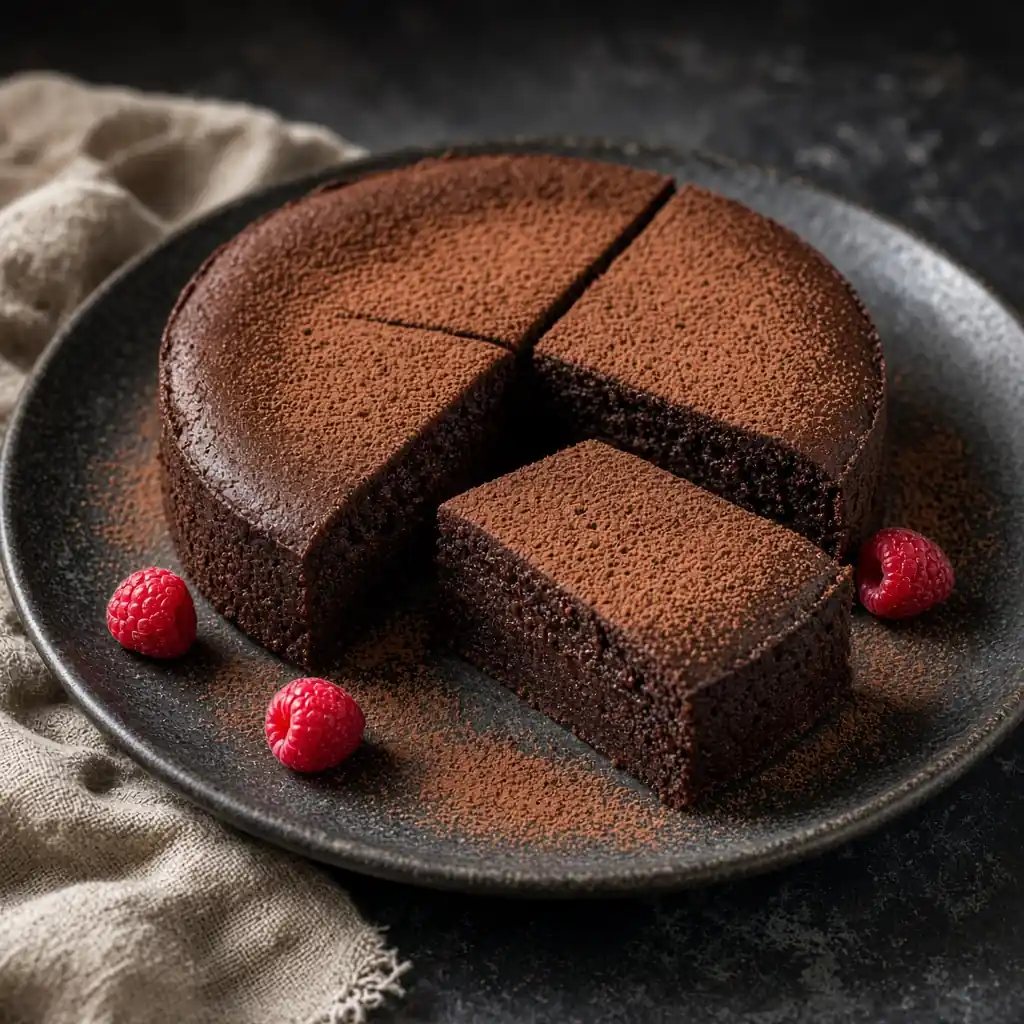
A classic flourless cake is built from eggs, chocolate or cocoa, and often ground almonds or a nut paste, with little or no wheat flour. The exact macros depend on your recipe, so log the ingredients you actually used. A few official building blocks:
- Unsweetened cocoa powder, 1 tablespoon (5.4 grams), from FDC 169593: 12 kcal, 1.1 g protein, 0.7 g fat, 3.1 g carbohydrate.
- Almonds, 1 ounce or 23 whole kernels (28.35 grams), from FDC 170567: 164 kcal, 6.0 g protein, 14.2 g fat, 6.1 g carbohydrate.
- 1 large egg (50 grams) from FDC 173424: 78 kcal, 6.3 g protein, 5.3 g fat, 0.6 g carbohydrate, calculated from 155 kcal and 12.58 grams of protein per 100 grams.
After the cake cools, weigh the whole cake, divide by the number of slices, and log one slice as that fraction of the recipe. That is more reliable than trying to photograph a plated wedge and guess.
Almond cookies
A short almond cookie can be as simple as ground almonds, an egg, and a modest amount of sugar or honey. Again, the log should follow the recipe. The almond and egg figures above are the official anchors. If you use 2 ounces of almonds (56.7 grams) in a small batch, that is two times the 1-ounce figures: 328 kcal, 12.0 g protein, 28.4 g fat, and 12.2 g carbohydrate, before the egg and any sweetener.
Bake until the cookies are set, cool them, and log one cookie as a fraction of the batch. If you only eat one from a plate of several, log the one.
Baked apples
A baked apple is one of the simplest gluten-free desserts, and it is easy to log because the official portion is a whole fruit. A medium raw apple with skin, 3 inches in diameter (182 grams), from FDC 171688, provides 95 kcal, 0.5 g protein, 0.3 g fat, and 25.1 g carbohydrate.
If you add butter, sugar, or nuts in the cavity, add those from their own entries. One ounce of almonds, as above, would change the plate substantially, especially the fat. Core the apple, add only what you want to log, and bake until tender. Serve one apple per person so the portion is obvious.
Yogurt, strawberries, and cocoa
This is a dessert you can assemble without turning on the oven, and every part has a clear official portion.
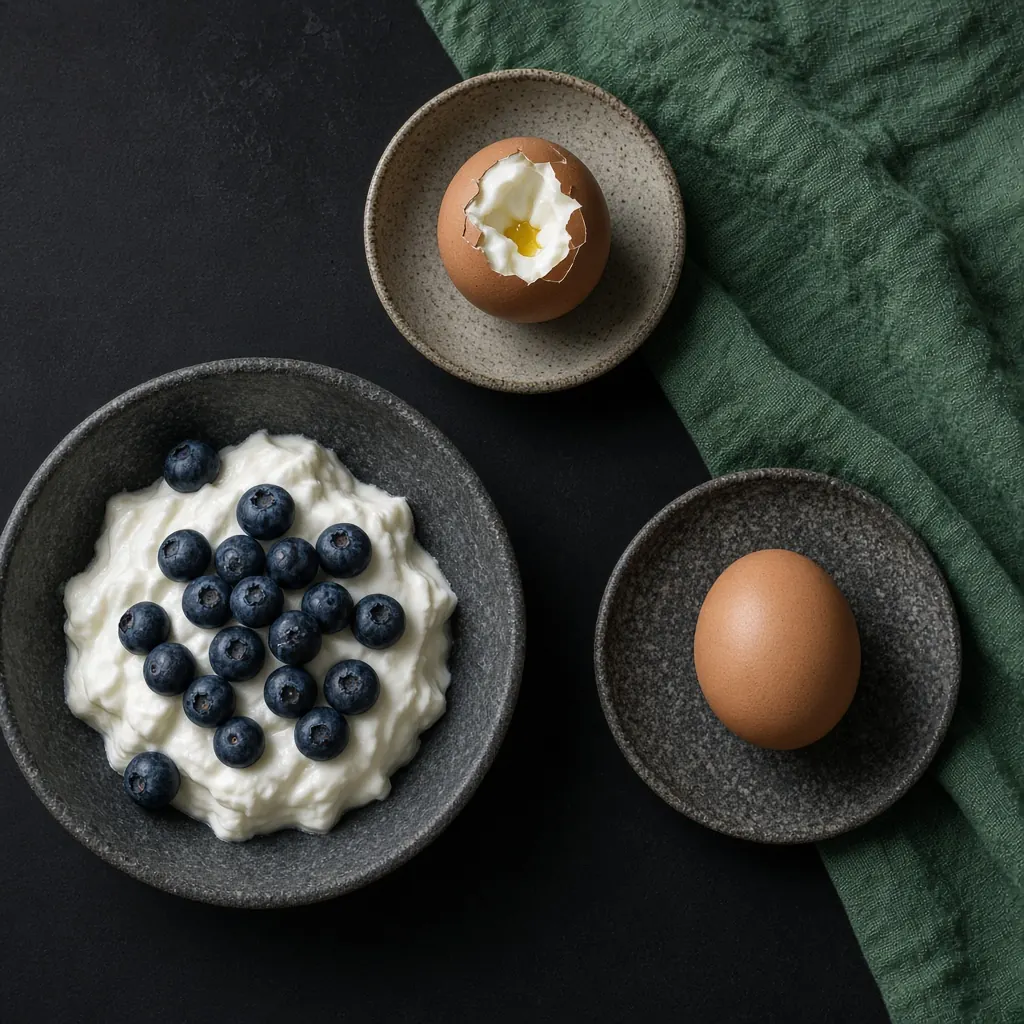
- 170 grams of plain nonfat Greek yogurt from FDC 330137: 104 kcal, 17.5 g protein, 0.6 g fat, 6.2 g carbohydrate.
- 1 cup of sliced raw strawberries (166 grams) from FDC 167762: 53 kcal, 1.1 g protein, 0.5 g fat, 12.7 g carbohydrate.
- 1 tablespoon of unsweetened cocoa (5.4 grams) from FDC 169593: 12 kcal, 1.1 g protein, 0.7 g fat, 3.1 g carbohydrate.
Bowl total: 169 kcal, 19.7 g protein, 1.8 g fat, 22.0 g carbohydrate. If you stir in honey or a sweetened cocoa, log that too. This bowl also happens to be one of the higher-protein desserts on the list, which is useful if you are already watching a protein goal.
Banana with cinnamon
A medium raw banana (118 grams) from FDC 173944 provides 105 kcal, 1.3 g protein, 0.4 g fat, and 27.0 g carbohydrate. Sliced and warmed in a pan, or eaten as it is with a pinch of cinnamon, it is a dessert that needs almost no planning.
If you add peanut butter, use the official measure. Two tablespoons of smooth peanut butter with salt (32 grams) from FDC 174266 provide 191 kcal, 7.1 g protein, 16.4 g fat, and 7.1 g carbohydrate. That topping changes the plate more than the banana itself, so it belongs in the log if you use it.
Rice pudding with low-fat milk
A stovetop rice pudding can be made with cooked rice, milk, and a sweetener, without wheat flour. The two official anchors are:
- 1 cup of cooked long-grain brown rice (202 grams) from FDC 169704: 248 kcal, 5.5 g protein, 2.0 g fat, 51.7 g carbohydrate, calculated from 123 kcal and 2.74 grams of protein per 100 grams.
- 1 cup of 1% milk (244 grams) from FDC 170872: 102 kcal, 8.2 g protein, 2.4 g fat, 12.2 g carbohydrate, calculated from 42 kcal and 3.37 grams of protein per 100 grams.
Those two ingredients alone, before sugar, are 351 kcal, 13.7 g protein, 4.3 g fat, and 63.9 g carbohydrate for the whole pot. Divide by the number of bowls you serve, add the sweetener you used, and log one bowl. If you make it with white rice instead, look up that entry rather than reusing the brown-rice figures.
How to log a homemade dessert
The reliable method is the same for every recipe on this list: enter the ingredients and amounts, record the weight of the finished batch or the number of equal pieces, and log the piece you ate. A photo of a slice can start the entry in ChefGPT, but you should still review the calorie and macro breakdown and match it to the recipe. How to track calories from a photo covers that review step.
If you serve the dessert after a restaurant meal, log it as its own item rather than hoping it appears in the dinner photo. How to log restaurant and takeout meals is the companion for the rest of that evening.
Download ChefGPT
ChefGPT is an AI calorie tracker for iPhone and Android. Snap a photo of your food to log it, review the calorie and macro breakdown, and save homemade dessert recipes so a later slice is easier to record.